
What is alkalized cocoa and how does it differ from non-alkalized cocoa?

Featured products Learn more about our offer
View products
Cocoa comes in various forms - powders, lumps, bars or paste. In the cocoa industry, cocoa powder is particularly popular, and we can find it in two forms - it is alkalized cocoa and non-alkalized cocoa. What is the difference between these two types of cocoa and what is the alkalization process?

Black cocoa - alkalized cocoa
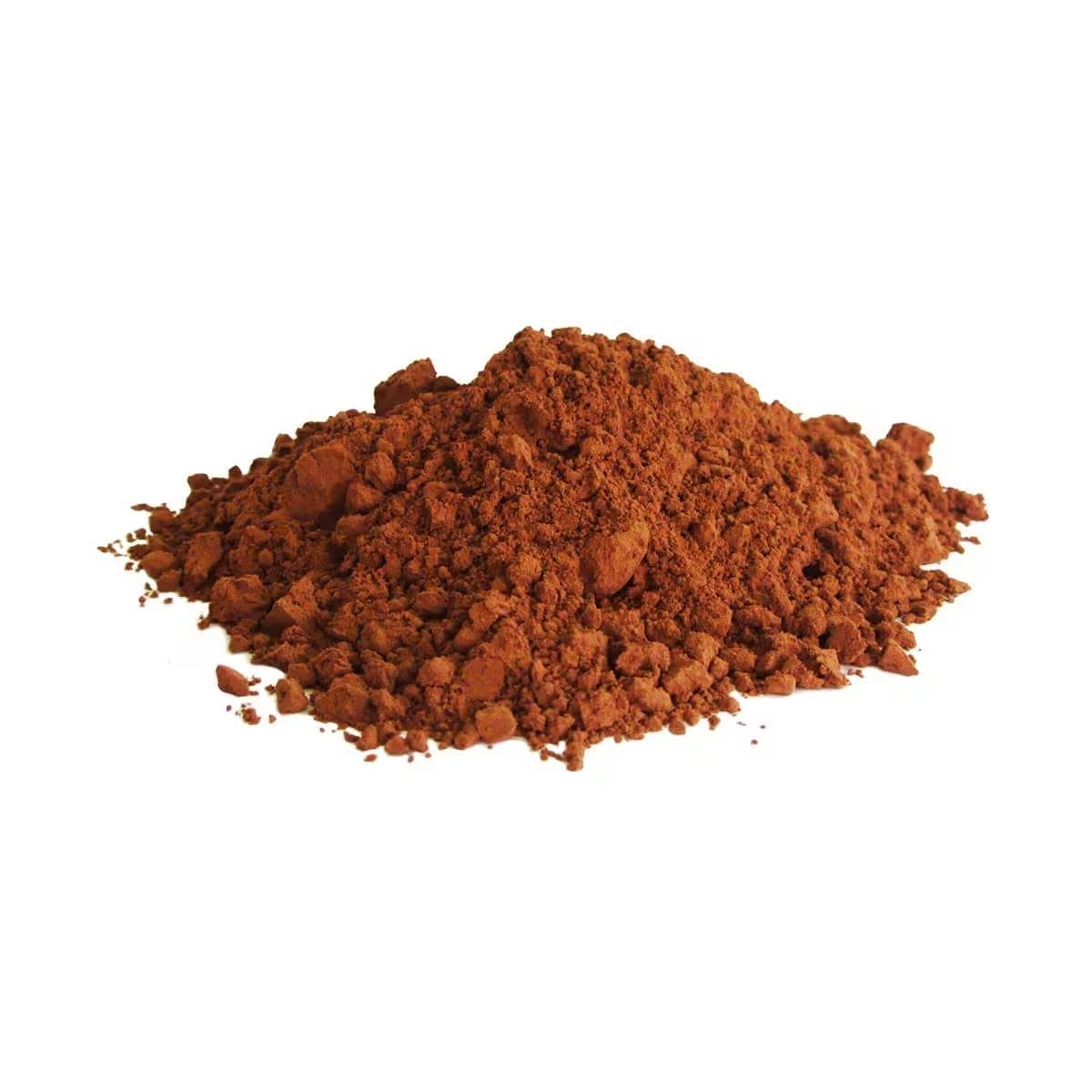
Black cocoa. It has an intense, dark color and a distinctive flavor. It is mainly used in confectionery - for baking cakes, preparing creams, toppings, decorations, but also beverages. However, in its original form, cocoa is much lighter. So how is this black powder obtained?
The alkalization process, known as early as the 1820s in the Netherlands, is responsible for the black color. Alkalization, or dutching, began as a way to make cocoa powder more soluble. However, it was soon noticed that the process not only promotes better solubility of cocoa in water, but also offers the possibility of changing the color and taste of the cocoa beverage.
From a technological point of view, alkalisation involves mixing cocoa with an alkaline solution and exposing the mixture to sufficiently high pressure and temperature. Finally, excess moisture must be removed by heating or drying. Alkalisation can vary in degree, depending on the strength of the solution, the type of alkaline compound, the reaction time and the temperature.

The phenomenon of black cocoa
Due to its origin, black cocoa is often referred to as Dutch cocoa. In its natural form, cocoa is slightly acidic and bitter, with a pH ranging from 5 to 5.6. The alkalisation process (Dutch process) neutralises the natural acidity of cocoa, increases its pH to around 7-8, makes it darker (hence the term black cocoa) and affects its taste 1.
What determines the popularity of black cocoa? Alkalized cocoa finds many supporters due to its milder taste than natural cocoa, much lower acidity and bitterness. This type of cocoa is also credited with better dispersibility, which makes it easier to prepare a cocoa drink. But what about the health properties of cocoa, which undergoes processing?
Is alkalized cocoa healthy?
Natural, unprocessed cocoa is considered a real treasure trove of vitamins. Cocoa contains flavonoids, alkaloids, antioxidants, a whole range of minerals, vitamins, and beneficial cocoa butter. Cocoa-based products have health benefits, especially for the cardiovascular system, thanks to their relatively high content of flavanols, particularly epicatechin 2.
However, while unprocessed cocoa is characterised by a high content of valuable compounds, the alkalisation process, which involves numerous complex chemical reactions, impoverishes the natural richness of cocoa, leading to undesirable changes in its nutritional, functional and microbiological properties. 3.
As a result of the alkalisation process, one study showed, among other things, a reduction in the amount of protein in alkalised cocoa, a reduction in amino acids, a reduction in total fat content, a reduction in antioxidant activity, a reduction in flavanol content and a reduction in theobromine and caffeine content 4.
How is natural cocoa powder made?
The process of producing organic cocoa powder begins with cultivation on certified plantations. The beans are harvested by hand, selected for the best quality and fermented to reduce the bitterness of the cocoa bean.
After the beans are cleaned in natural water, they are hulled and the core is extracted, which is divided into nuggets. Subsequently, the cocoa nuggets are ground into a paste and the resulting fat is extracted along with it. The remainder is dried and finely ground into cocoa powder.
Alkalized cocoa or natural cocoa?
Natural, organic cocoa will have a more intense, bitter taste and will retain most of its valuable nutritional properties. Black alkalized cocoa will satisfy chocolate gourmands who are not fond of the bitter taste, but its health-promoting effects will be clearly limited.
Both natural and alkalized cocoa contain much less fat than cocoa beans, with the fat content of alkalized cocoa being only about 10-12%, while that of organic cocoa is about 20-22%.
Natural cocoa is undoubtedly healthier, contributes to the well-being, benefits the heart and other organs. Consumed regularly, it provides the body with valuable compounds and supports the body and spirit.
- Li, Y., Feng, Y., Zhu, S., Luo, C., Ma, J., & Zhong, F. (2012). The effect of alkalization on the bioactive and flavor related components in commercial cocoa powder. Journal of Food Composition and Analysis ↩︎
- Vega, C., & Kwik-Uribe, C. (2012). Theobroma cacao – An Introduction to the Plant, Its Composition, Uses, and Health Benefits. Cocoa Butter and Related Compounds ↩︎
- https://onlinelibrary.wiley.com/doi/full/10.1111/1541-4337.12581 ↩︎
- https://onlinelibrary.wiley.com/doi/full/10.1111/1541-4337.12581 ↩︎